



2026-05-26 / Food · Seafood / Operational AI
The Invisible Drift: why seafood AI needs a monitor layer
A case study on 735 seafood exhibitor records, model disagreement, and why practical AI adoption depends on evidence routing before an answer becomes a workflow decision.
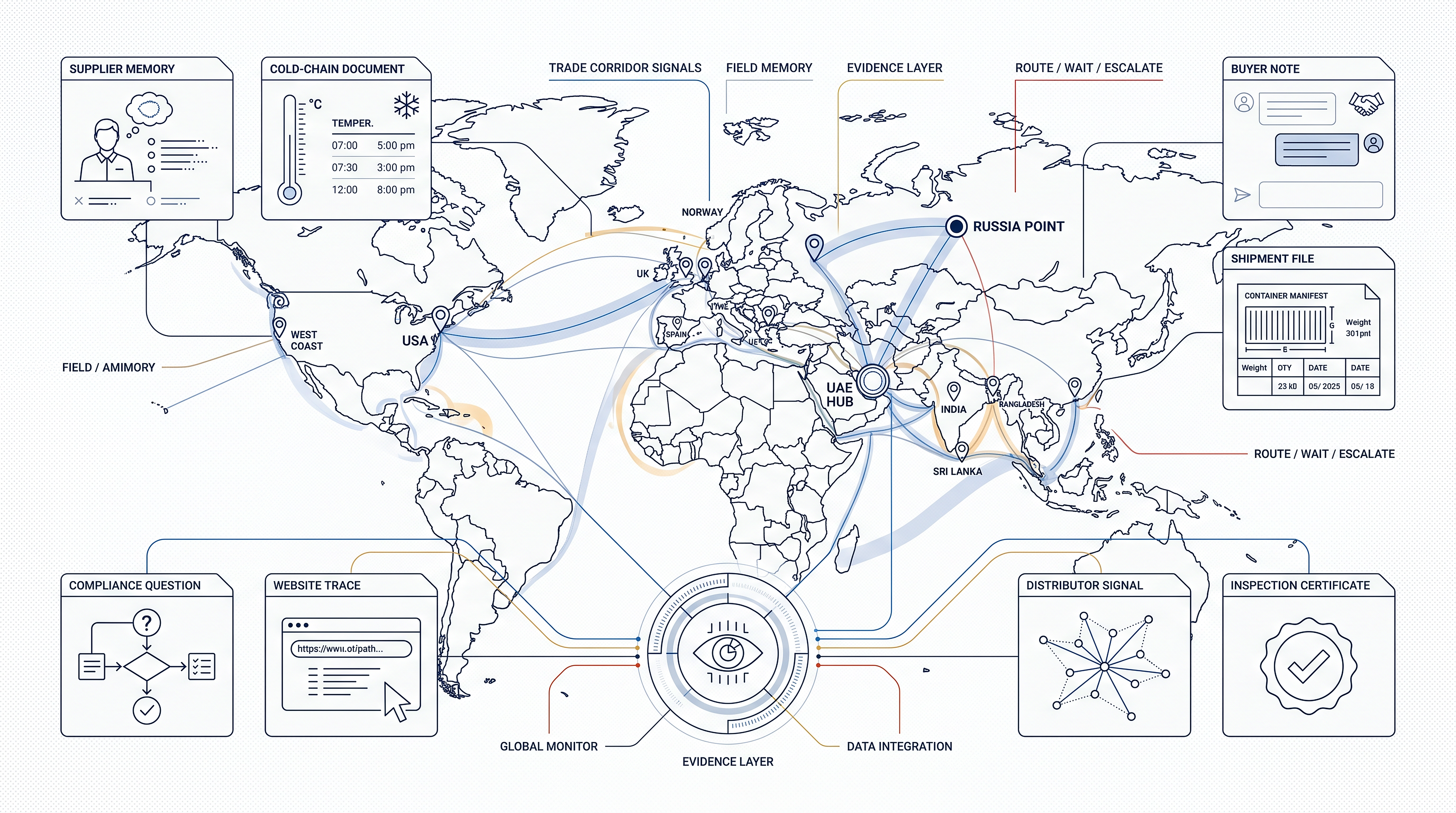
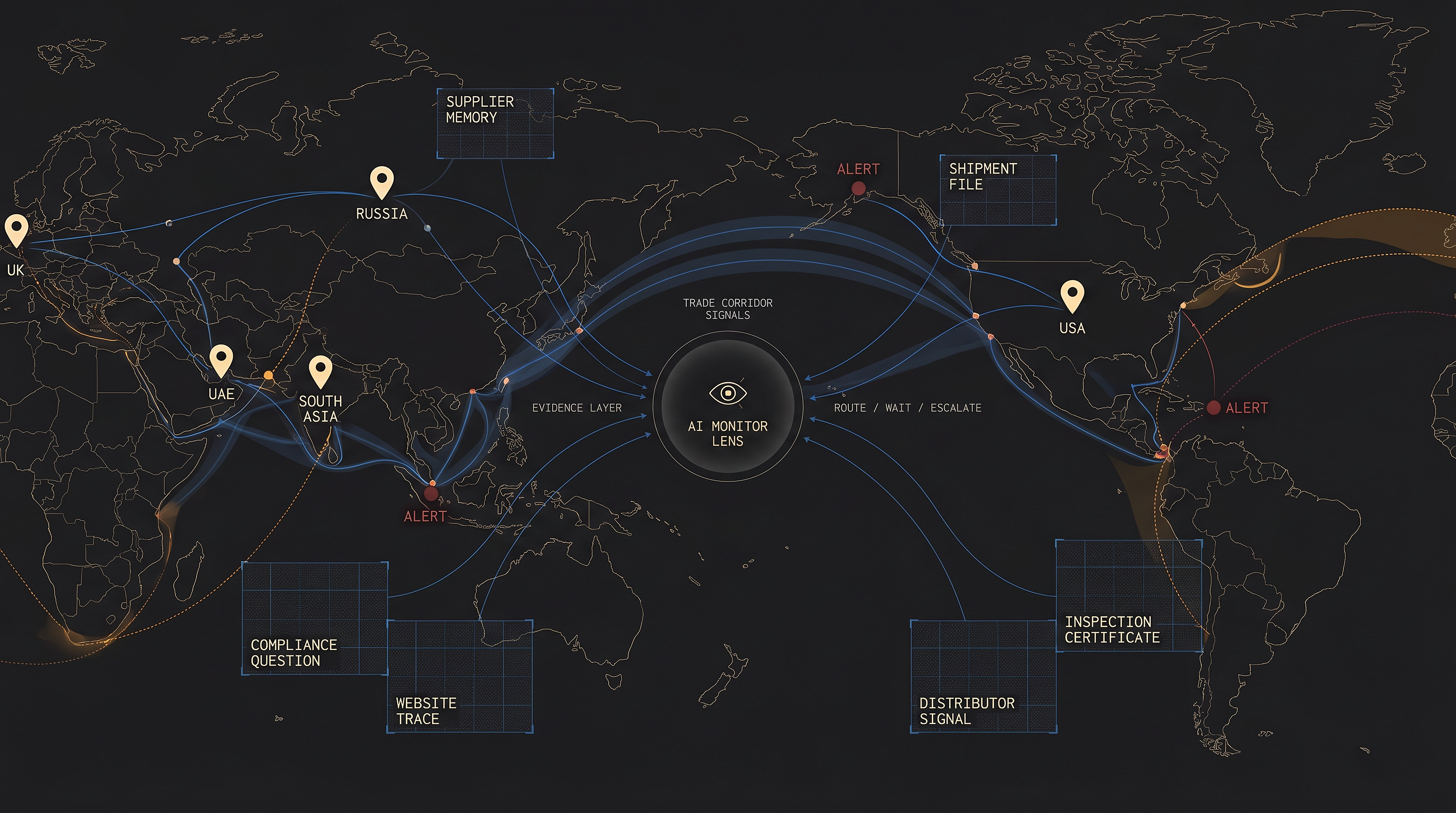
The failure mode was not a bad answer. It was unsupported confidence entering work
We gave two AI workflows the same seafood exhibitor list and asked for the headquarters or primary operating country. The task looked like enrichment. In practice, it tested whether AI could preserve enough evidence to be trusted inside routing, segmentation, compliance, and outreach.
12
major models shipped in one week
March 2026 compressed model selection into a weekly operating problem, not an annual procurement cycle.
600x
token-price decline since 2020
Cheaper tokens do not automatically mean cheaper workflows when agents expand context, retries, and review loops.
95%
enterprise gen-AI pilots with no P&L impact
The failure is usually integration, evidence, and operating design, not raw model intelligence.
From margin leakage to reasoning leakage
The earlier margin note showed how quiet handoff errors erode a seafood file. This note is the AI version: a plausible country tag, missing source context, or overconfident inference can bend routing before anyone sees the weakness.
A seafood company can farm in one country, process in another, invoice from a third, and sell through a distributor in a fourth. The field called country is not trivia. It is an operating inference.
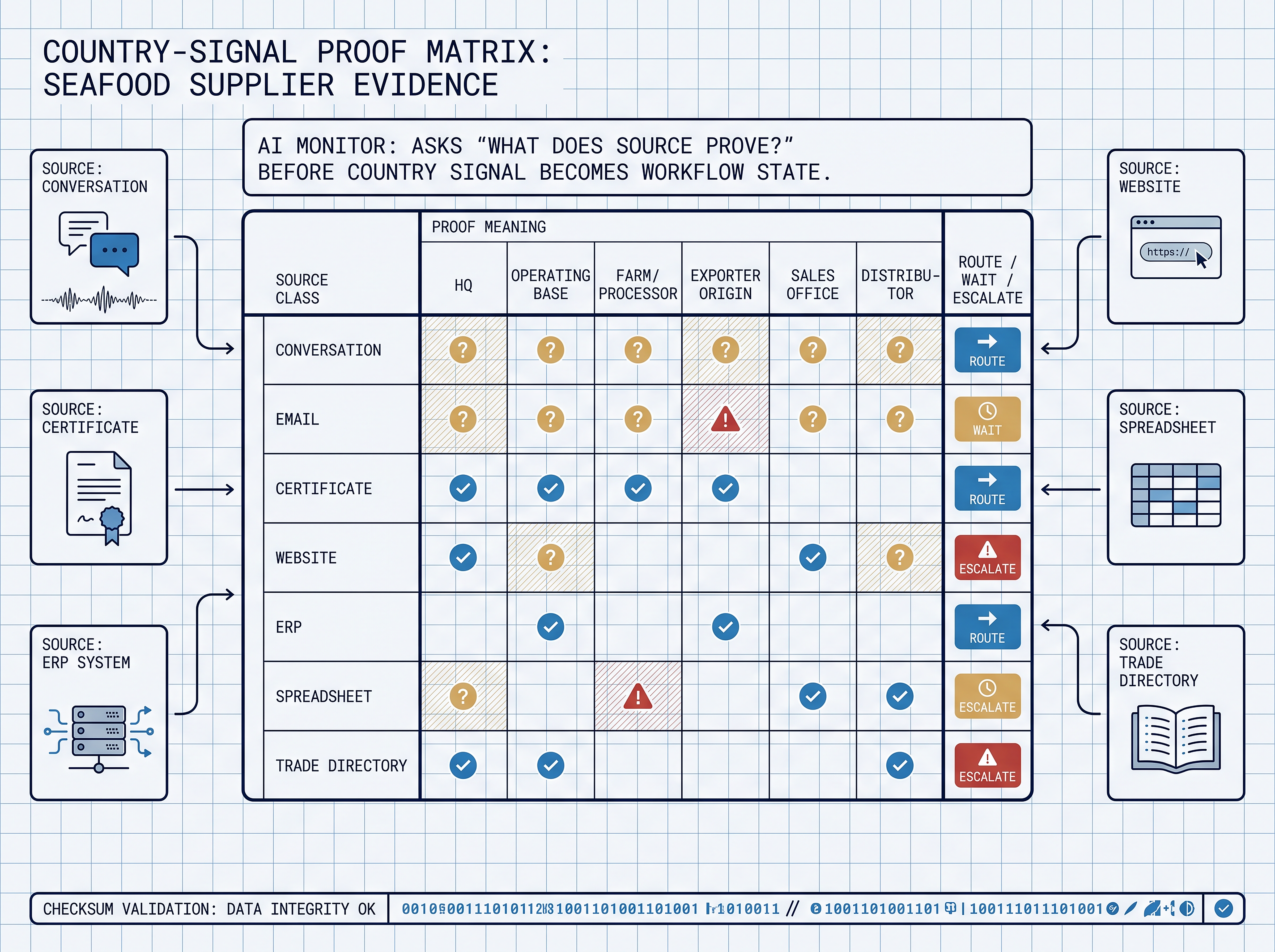
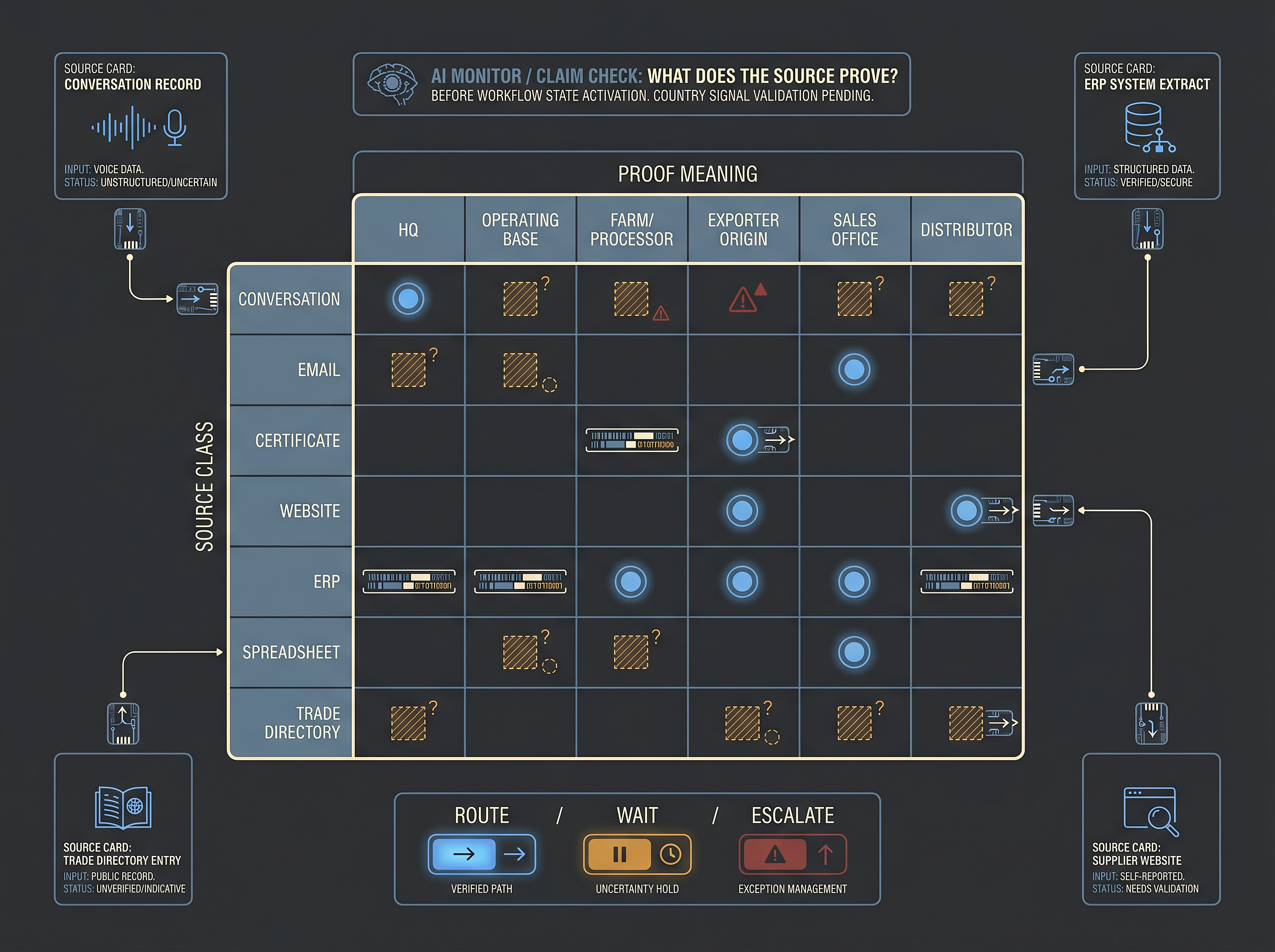
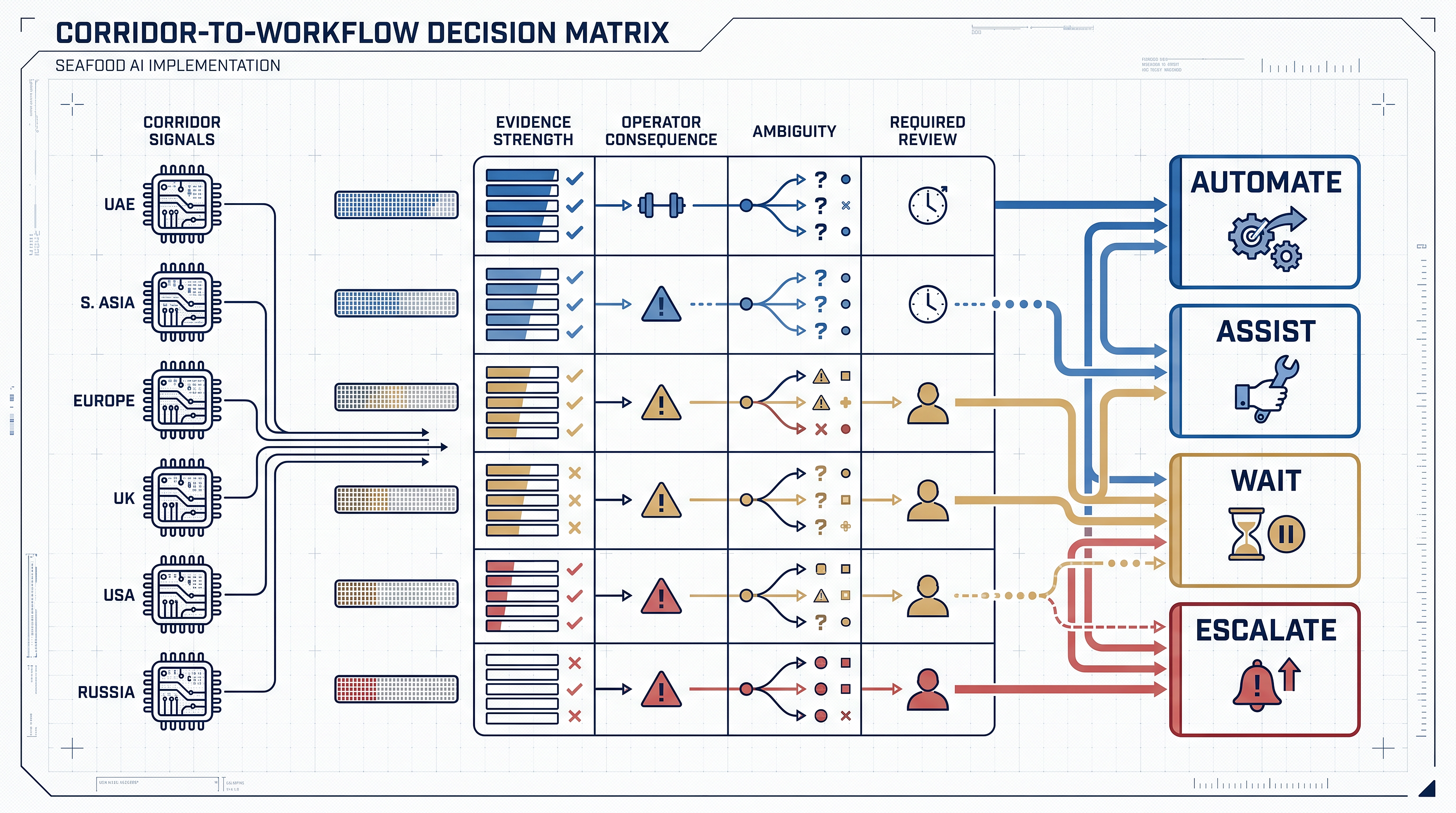
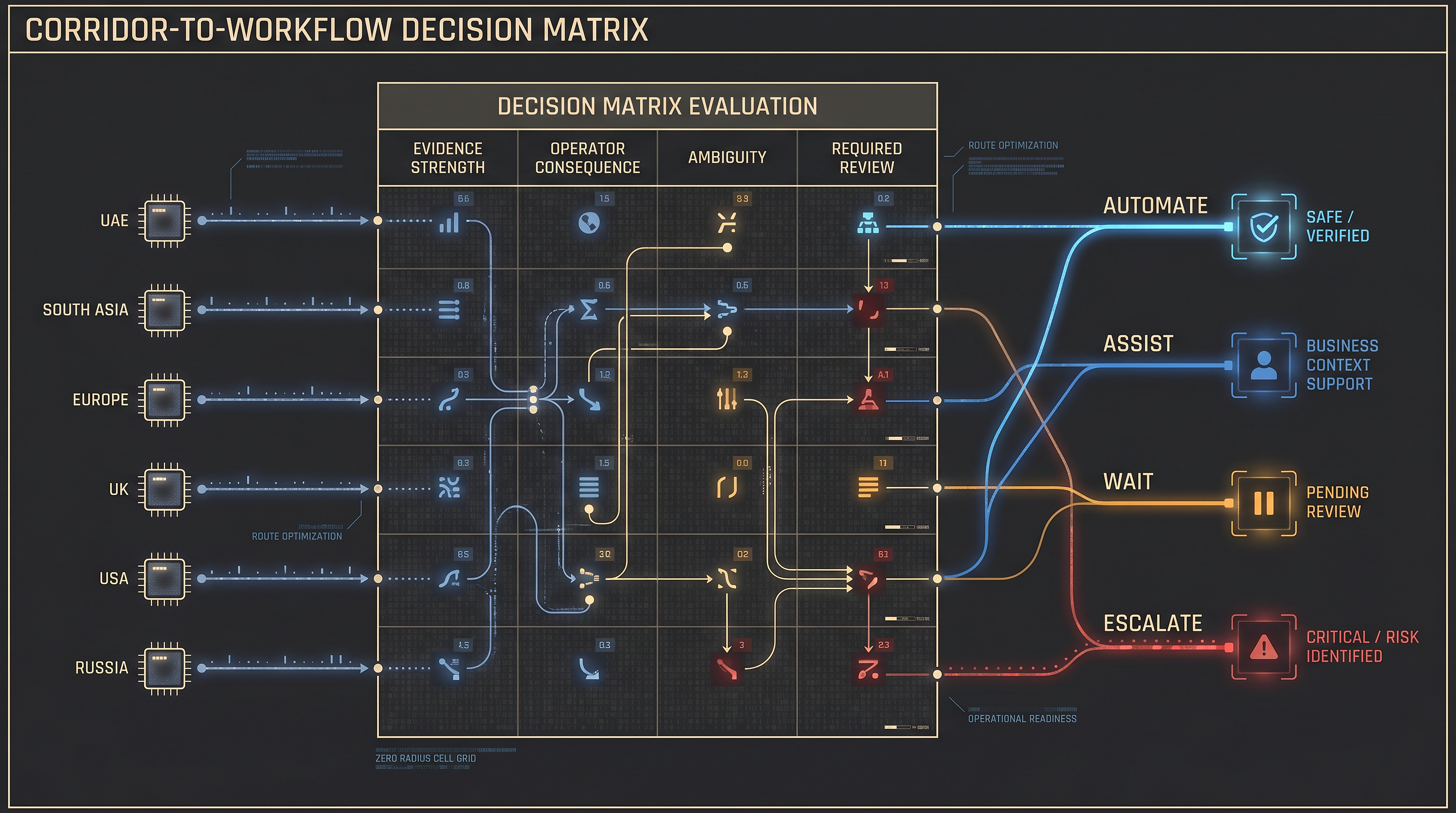
Evidence routing should feel like moving one decision card at a time
The old static evidence chain becomes an operator control: advance the card, inspect the evidence question, then decide whether the row moves, waits, or escalates.
01 / Source file
Start with the messy operating object
The input was a 735-row seafood exhibitor list. The field looked simple: infer the headquarters or primary operating country. In seafood, that can mean farm, processor, exporter, group HQ, sales office, or distributor signal.
Operator question
What does this field change downstream?
Arena snapshot / as of May 29, 2026
The public leaderboard makes the shortlist, the trade workflow score picks the router
Recreated from the free public Arena leaderboard view, then remapped for seafood operators: evidence work, routing work, and overall fit for messy supplier files. The point is not to crown one model. It is to make frontier intelligences easy to assign to the right job.
Which model best normalizes exporter, processor, distributor, and HQ signals into a usable supplier record.
Arena rank 6 / Google
Gemini 3.1 Pro
Broad reasoning and supplier-file normalization.
Arena rank 8 / OpenAI
GPT-5.5 High
Structured work plans, extraction checks, and agentic handoffs.
Arena rank 2 / Anthropic
Opus 4.7 Thinking
Careful exception review and policy reasoning.
What this means for seafood operators
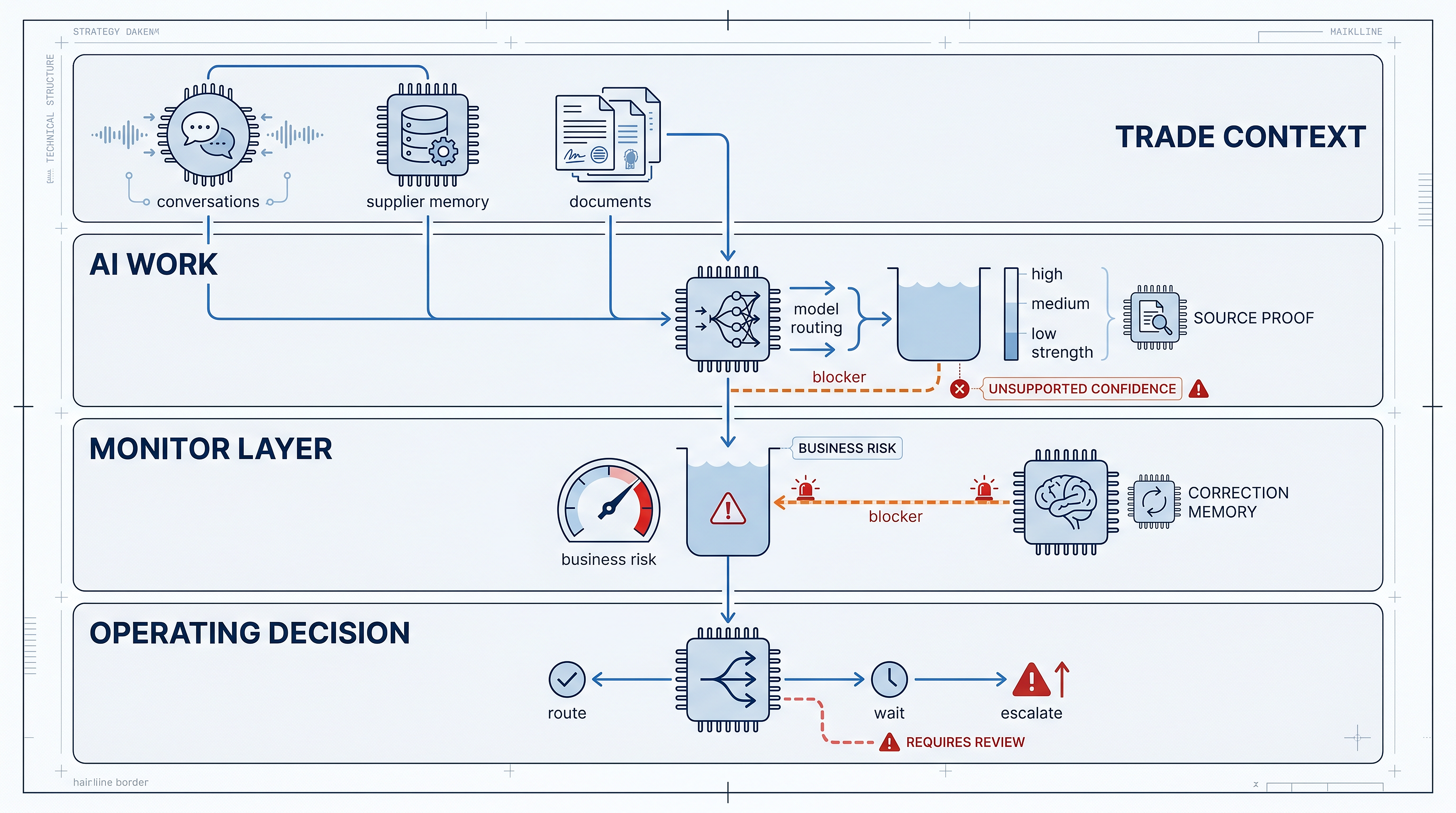
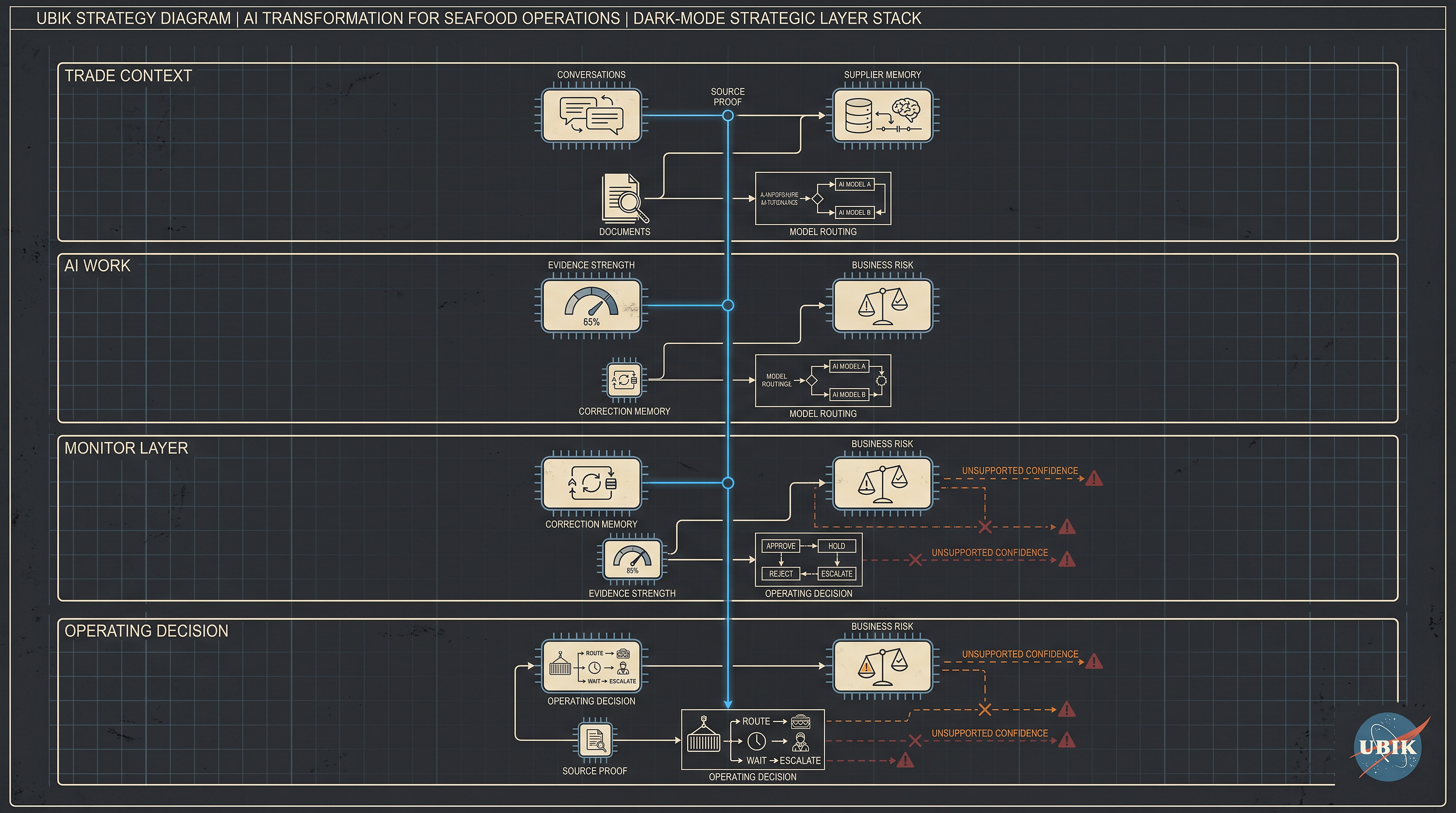
The lesson is not that every task needs two LLMs. The lesson is that every AI-assisted decision needs a monitor appropriate to its risk. Low-risk enrichment can move with agreement and evidence. Medium-risk workflows need disagreement queues. High-risk workflows need direct source traceability and human sign-off.
Ubik’s job is to make that practical: read messy trade context, preserve evidence, compare competing answers, route exceptions, remember corrections, and keep the operator in control when the decision matters.
Final takeaway
AI transformation gets practical when frontier models meet forward-deployed trade expertise
Route the model
Use the right frontier intelligence for research, extraction, exception review, planning, customer updates, or compliance support.
Deploy the operator layer
Ubik brings seafood context, workflow design, evidence routing, and continuous improvement into the day-to-day system.
Lower the transformation cost
Teams get operating discipline associated with elite consulting and platform work, without waiting for a massive transformation program.
Sources